
1. Energy Audit
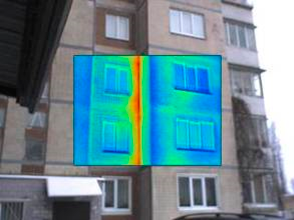
Energy Audit is an examination of the structural elements and engineering systems of a building, an analysis of energy resource consumption and its efficient utilization, and the provision of recommendations regarding the need for implementing priority energy-efficient measures.
An energy audit answers the question: "What are the most effective energy-saving measures to implement first?" and what effect we can expect to achieve. та який ефект ми отримаємо.
According to the Ukrainian law "On Energy Efficiency," an energy audit is defined as the determination of the efficiency of the use of fuel and energy resources (hereinafter referred to as FER) and the development of recommendations for its improvement.
Interpreting this provision of the law, we understand that an energy audit is conducted to establish the efficiency of energy resource utilization and to develop economically justified measures to reduce their consumption. In other words, it involves identifying ways to improve energy efficiency in buildings of various purposes, from residential buildings to enterprises in different industries. Conducting such an assessment allows us to ascertain how effectively FER is consumed in a building or on a business premises and to identify where and why excess energy losses occur. Based on the problem identification, an audit specialist develops corresponding recommendations that need to be implemented to increase energy efficiency and reduce energy losses in the building.
Furthermore, it specifies the prioritization of implementing energy-efficient measures based on capital investment and payback period. Conducting an energy audit allows for obtaining recommendations for implementing an energy management system.
2. Energy Certificate
<
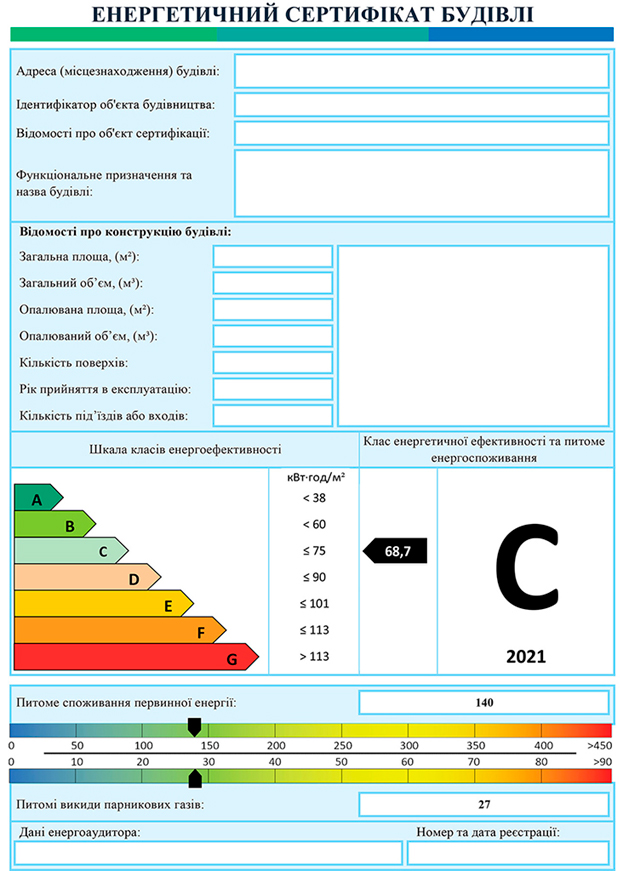
Energy efficiency certification s a type of energy audit in which an analysis of information on the actual or design characteristics of structural elements and engineering systems is conducted. It assesses compliance with the calculated level of energy efficiency against established minimum requirements for the energy efficiency of buildings. Recommendations are provided to enhance the energy efficiency of buildings, taking into account local climatic conditions and being technically and economically justified.
Energy efficiency certification is carried out in accordance with the requirements of the Ukrainian law "On the Energy Efficiency of Buildings."
As a result of certification, an energy efficiency certificate for the building is issued.
An energy efficiency certificate is an electronic document of a prescribed format that is entered into the State Energy Efficiency Certificate Database. It includes indicators and the energy efficiency class of the building, recommendations for minimizing heat energy losses in accordance with the established legal procedure, and other information about the building.
Energy efficiency certification of buildings is mandatory for the following:
- Construction projects (new construction, reconstruction, major repairs) classified as objects with medium (СС2) and significant (СС3) consequences according to the Law of Ukraine "On Regulation of Urban Planning Activities."
- State-owned buildings with a heating area of over 250 square meters that are frequently visited by citizens and where government authorities are located in all premises.
- Buildings with a heating area of over 250 square meters where local self-government authorities are located (in case they undertake thermal modernization of such buildings).
- Buildings undergoing thermal modernization that receive state support and must achieve an energy efficiency class for the building not lower than the minimum energy efficiency requirements for the building.
3. Instrumental Measurements
Our company also offers the following services:
- Inspection of building envelope structures using a thermal camera to identify areas of significant heat loss.
- Measurements of thermal resistance in walls and roofs to check compliance with current standards.
- Measurements of lighting levels in premises to ensure compliance with current norms.
- Measurements of temperature, humidity, and carbon dioxide levels in indoor spaces and verification of their compliance with sanitary standards.
- Detection of underfloor heating pipe leaks using a thermal camera.
- Phase measurements in the electrical panel using an electrical analyzer to determine the uniformity/irregularity of phase distribution and voltage levels during peak loads.