
The Municipal Enterprise "Project Implementation Group for Energy Efficiency in Administrative and Public Buildings of the City of Kyiv" (hereinafter referred to as ME "PIGEE") was established based on the decree of the executive authority of Kyiv City State Administration (Kyiv City Administration) dated July 8, 1999, No. 1119, with the purpose of providing organizational support for the implementation of the investment project of the International Bank for Reconstruction and Development - "Energy Efficiency in Administrative and Public Buildings of the City of Kyiv" and ensuring monitoring of the Project's further effectiveness.
The International Investment Project "Energy Efficiency in Administrative and Public Buildings of the City of Kyiv" (hereinafter referred to as the project) has been developed with the aim of supporting the State Comprehensive Energy Efficiency Program by increasing the level of efficient heat energy consumption in the sector of administrative and public buildings in the capital city of Ukraine.
Development
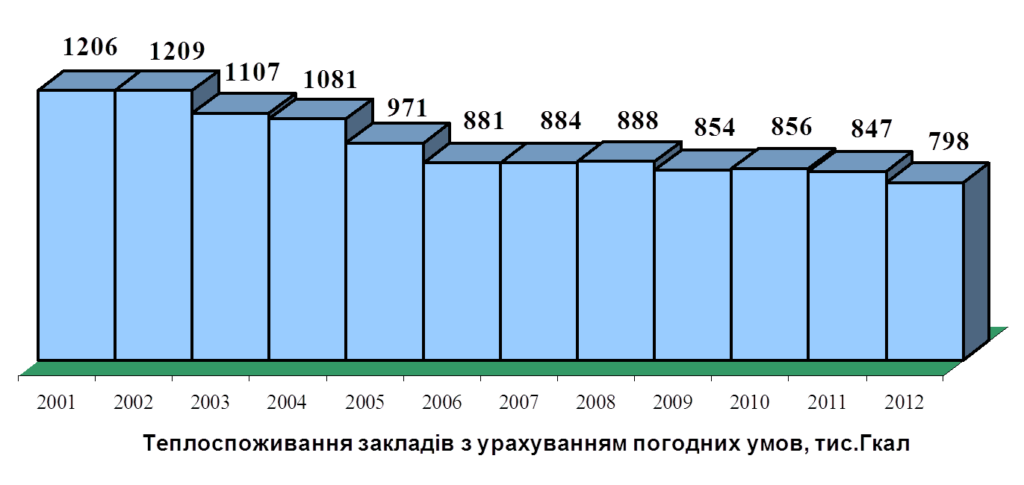
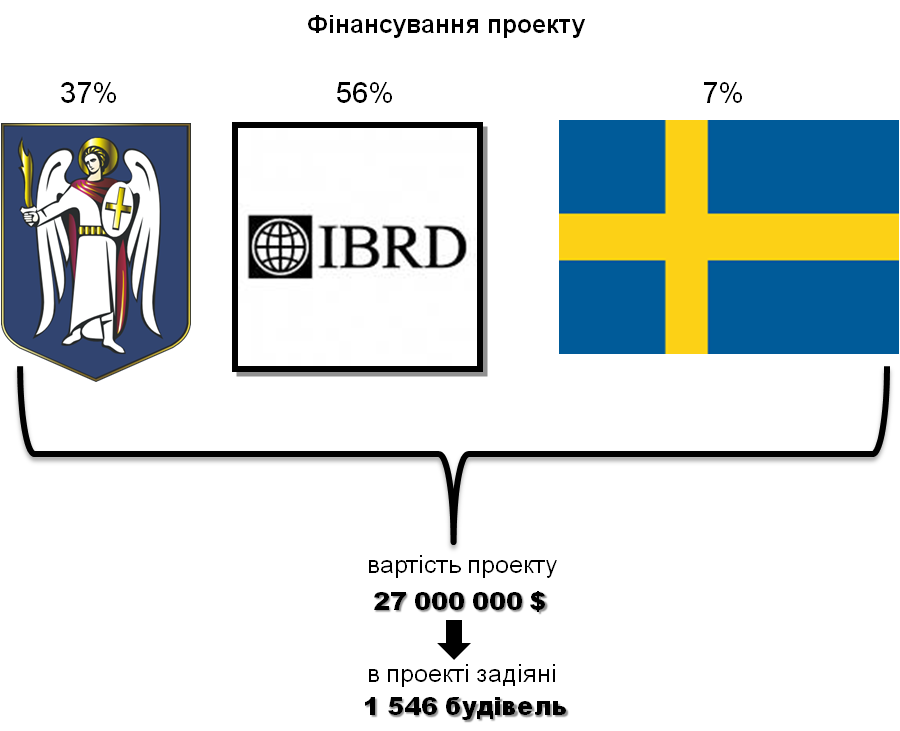
The project involved the implementation of fast-payback energy-saving measures that resulted in savings of thermal energy used for heating municipal facilities. Within the framework of the project, 1,546 municipal buildings in the city of Kyiv were modernized, including kindergartens, schools, orphanages, polyclinics, museums, and other municipal properties. These institutions are funded from the city budget, so the project aimed at significantly reducing budget expenditures on heating. The project covered 1,546 buildings, which are part of 1,283 municipal institutions in Kyiv, with a total area of over 5 million square meters. The total cost of the project was approximately 27 million US dollars.
- The main measures implemented during the project included:
- Conducting energy audits and design work: Within the project, energy audits were conducted for 1,560 budgetary sector facilities, along with design work for the reconstruction of heating systems in these facilities, including the installation of modular individual heating substations.
- Installation of thermal energy commercial metering devices: Prior to the installation of these meters, administrative buildings were billed based on contracted heat load. Now, payments for heating and hot water are based on actual heat consumption. After the project's completion, 1,357 buildings were equipped with thermal energy commercial metering devices.
- Installation of individual modular heating substations (IMHS): These IMHS units are equipped with automatic regulation systems and pumping equipment, ensuring a constant heating temperature in the premises with optimal heat energy consumption. The installation of 1,173 IMHS units optimized the heat energy consumption in the heating systems of buildings.
- Installation of radiator reflectors: In 940 buildings (covering 118,823 square meters), radiator reflectors were installed to partially reflect infrared radiation from the walls and direct it into the rooms.
- Sealing of windows and doors: Sealing was carried out using a special silicone tube to improve their thermal insulation properties in 1,270 buildings (covering 2,478,583 linear meters).
- Modernization of plumbing equipment: Plumbing equipment was modernized in 14 healthcare facilities, including the replacement of 3,727 faucets.
- Replacement of shut-off valves: Shut-off valves were replaced in 200 facilities, totaling 400 units.
- Modernization of hot water mixing systems to 37°C: Hot water mixing systems were upgraded in 260 preschool facilities, involving the replacement of 2,054 mixing units.
- Replacement of windows: 254 windows that could not be repaired were replaced with modern, thermal- and noise-insulating metal-plastic windows (total area: 1,414 square meters). The implementation of the proposed energy-saving measures in the project allowed for the repayment of the loan and reduced expenses from the city budget.
- Improving the country's trade balance: The reduction in the need for imported fuel as a result of the project positively impacted the trade balance, as less foreign currency was spent on fuel imports.
- покращенню зовнішньоторговельного балансу країни за рахунок зменшення потреби в імпорті палива
- Health and well-being benefits: The project led to a decrease in illness rates and an improvement in the effectiveness of work, education, and healthcare processes due to the adherence to thermal comfort standards in buildings.
- Creating additional jobs and energy-saving service infrastructure: The project likely generated employment opportunities related to its implementation and the maintenance of energy-saving systems and equipment.
- Enhancing the reliability of the heating system: The project's improvements likely resulted in a more reliable and efficient heating system, reducing downtime and improving overall heating system performance.
- Development of technical specifications for the project's work and schedules for their implementation.
- Contracting for the installation of equipment and the execution of works and services financed by the city budget.
- Preparation of technical specifications and tender documents for the procurement of equipment, works, and services, following the World Bank standards, to implement the planned energy-saving measures.
- Monitoring the execution of contracts and ensuring the acceptance of completed work.
- Handling financial documentation and organizing its passage between the General Contractors, the Ministry of Finance of Ukraine, and the World Bank.
- Providing periodic reports on the project's status to the Kyiv City State Administration (KMDA), the Ministry of Finance of Ukraine, and the World Bank.
- Project monitoring to ensure the repayment of the World Bank loan.
- Coordination and inspection of the maintenance of modular individual heating substations (MIHS) and thermal energy metering units.
- Preparation and implementation of energy efficiency projects, including thermal modernization of budgetary sector facilities, reconstruction of engineering systems, and energy supply sources, often with external financing involvement.
- Implementation of alternative energy sources.
- Conducting energy audits, including thermal imaging inspections and instrumental measurements in energy supply systems, as well as providing recommendations for efficient energy use.
- Implementation of all levels of energy management systems (creating automated systems for energy consumption tracking and analysis, conducting training sessions, consultations, and seminars on efficient energy use for individuals involved in energy management systems).
- Configuration and maintenance of individual heating substations and thermal energy commercial metering units installed in budgetary sector facilities.
In addition to reducing thermal energy consumption, the implementation of the project contributed to:
The Municipal Enterprise "GVP" assumed the primary responsibilities for the implementation of the project, including:
According to the final report from the World Bank (Report 33154-UA), the activities of the Municipal Enterprise "GVP" have been highly praised.
TODAY
The Municipal Enterprise "GVP" comprises highly professional experts with experience in specific fields such as procurement organization, financial management, energy management, energy auditing and design, energy-saving measures implementation, monitoring, and dispatching.